I’m from New Zealand, I live in Spain, and I work for a US tech company. It’s a combination that tends to prompt a lot of questions. How do I get paid? Do I need a US work visa? And what the heck happens with taxes?
After more than six years of working remotely, I’ve found a setup that works really well for me. There are extra responsibilities, currency fluctuations, and a slightly later workday than I’d ideally choose. But for the work I get to do and the income I earn, those trade-offs are worth it.
The important thing to understand is that working for a US company doesn’t necessarily mean being a US employee. That distinction explains a lot about my arrangement.
Key Takeaways
- My contractor arrangement lets me work from Spain as part of a US-based team.
- Dollar payments bring exchange-rate risk, and I manage my own local tax obligations.
- Benefits and working hours depend on the company and the specific arrangement.
- Finding global remote roles takes targeted searching, professional connections, and evidence of strong skills.
Visas: I’m a Contractor, Not a US Employee
I’m very much part of the core team at ConvertKit. I attend team meetings, go on team retreats, and contribute as a member of the team. But legally, I’m hired on a contract basis rather than as an employee.
My contract sets out an amount I’m paid each month to do work for the company. In my situation, I don’t need a US work visa because I’m doing that work from outside the US.
Some US tech companies take a different approach. They establish business entities in countries such as the UK or Germany, then hire people as employees of those local entities. That’s another way international hiring can work, but it isn’t how my role is structured.
My permission to live in Spain is a separate part of the picture. Alongside being a New Zealander, I’m also part British and have a British passport. I moved to Spain before the UK left the EU, and I have a Spanish residency card.
Those are two different questions: how a company hires you, and your right to live and work where you’re based. My circumstances explain my setup, not a visa route that everyone can copy.
How I Get Paid, and Why Exchange Rates Matter
I submit an invoice to ConvertKit every two weeks, and the company pays my business. Those invoices are in US dollars.
Because I live in Europe, exchange rates affect how much that money is worth to me. Even when the dollar amount stays the same, the amount I receive in euros can change from month to month.
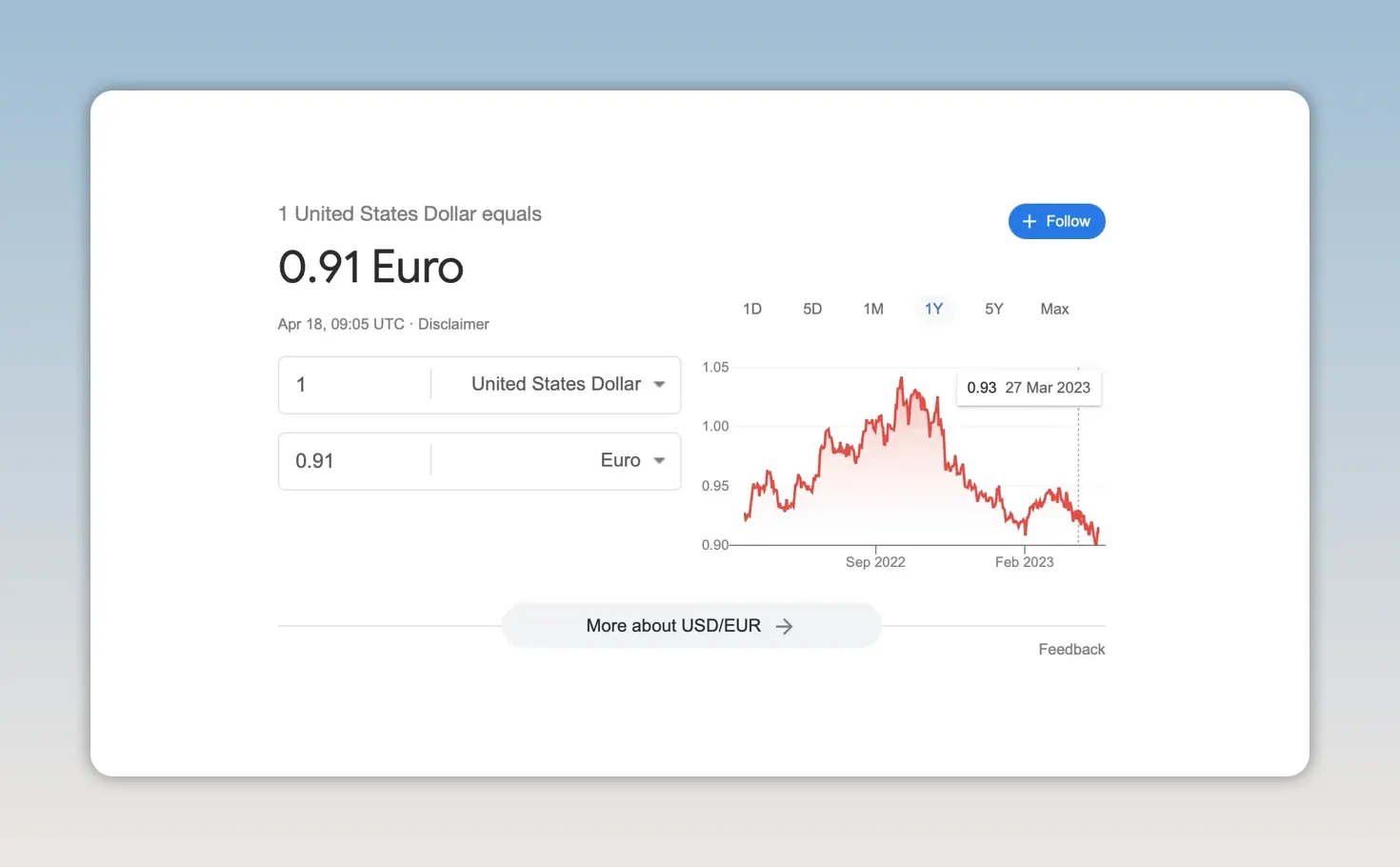
That’s one of the risks I take on as a contractor billing in another currency. It’s not something to ignore when thinking about what a role pays.
For me, though, the difference between what a US company will pay for my role and what I could earn in a comparable Europe-based role makes that risk worthwhile. That’s my personal calculation, rather than a promise that every US remote job will pay more.
Taxes: The Money Arriving Isn’t All Mine to Spend
Taxes are easily the topic people are most curious about. In my situation, I don’t pay US tax on this work. I’m not a US tax resident, and I don’t live or perform the work there.
But that absolutely does not mean I don’t pay tax. As a contractor, managing my taxes is my responsibility.
With employment, tax is often withheld from your paycheck before you receive it. As a freelancer, self-employed person, or contractor, you need to manage those obligations yourself. ConvertKit pays me the full invoiced amount, and I need to make sure I:
- Set aside enough money to cover my tax bill.
- Pay the correct taxes for my circumstances where I live.
- Keep good records so everything can be handled properly.
I have accountants who help me with this, especially because tax rules in Spain can be complicated. Their help makes the process much easier, but I still need to keep records and remember that I can’t spend everything that comes into my business.
If you’re considering a similar arrangement, my strongest advice is to find an accountant who understands your situation. Tax rules differ between countries, so my experience isn’t a substitute for advice specific to you. Paying for professional help is worth it to get this right.
The company I contract for isn’t handling my personal tax obligations for me. That responsibility sits with me.
Healthcare, Vacation, and Work Expenses
Being a contractor doesn’t automatically tell you what benefits you’ll receive. That depends on the company and the arrangement you agree to.
ConvertKit gives me broadly similar benefits to its US employees, although some are delivered differently:
- Health insurance: I receive an additional stipend to pay for my own insurance, rather than getting coverage through the company as US employees do.
- Vacation: I get four weeks of vacation time, the same as the US employees. So, no, working for a US company hasn’t meant having only two weeks off.
- Equipment: In my contractor setup, I provide the equipment I need to do the work.
- Electricity: My electricity bill is my own expense. The company doesn’t pay it.
The equipment point is part of how my contractor arrangement works, not a blanket rule to apply to every international contract. The useful thing is to understand exactly what’s included in an offer, rather than assuming that either employee benefits or contractor expenses will work a particular way.
Time Zones: Flexible Hours, With Some US Overlap
I don’t have to work strictly US hours. ConvertKit is fully remote, we do a lot of work asynchronously, and we’re trusted to get our work done without everyone being online at the same time.
That said, most of the team is based in the US, so I do need some overlap with US time zones. With the team largely spread across North America and Europe, meetings tend to happen in the US morning, which is the afternoon for me.
My workday is usually closer to noon until around 7 p.m. than a traditional nine-to-five.
Would I prefer to finish earlier? Absolutely. But shifting my day a little later is a compromise I’m happy to make for this role and the US-level income that comes with it.
For me, that’s what flexibility looks like: not complete freedom from scheduling constraints, but enough independence to work effectively alongside a team on another continent.
How I Got the Job, and How to Find International Remote Roles
I wish I had a secret hack for landing a US remote job from Europe. I don’t. I got my role through networking.
I was speaking at a conference and met Nathan, ConvertKit’s CEO. He was looking for a designer to work on marketing things. I was a designer who worked on marketing things. It turned out to be a good match.
I know that isn’t a neat, repeatable process someone else can follow. “Meet the right CEO at a conference” isn’t exactly a job-search strategy.
Look for worldwide hiring, not just remote work
Even as remote roles have become more common, plenty of companies still restrict hiring to the US. They might want everyone in US time zones, struggle with asynchronous work, or not want to handle international contracting or establish an overseas entity.
It’s a shame, because there’s so much talent around the world. But international opportunities do exist.
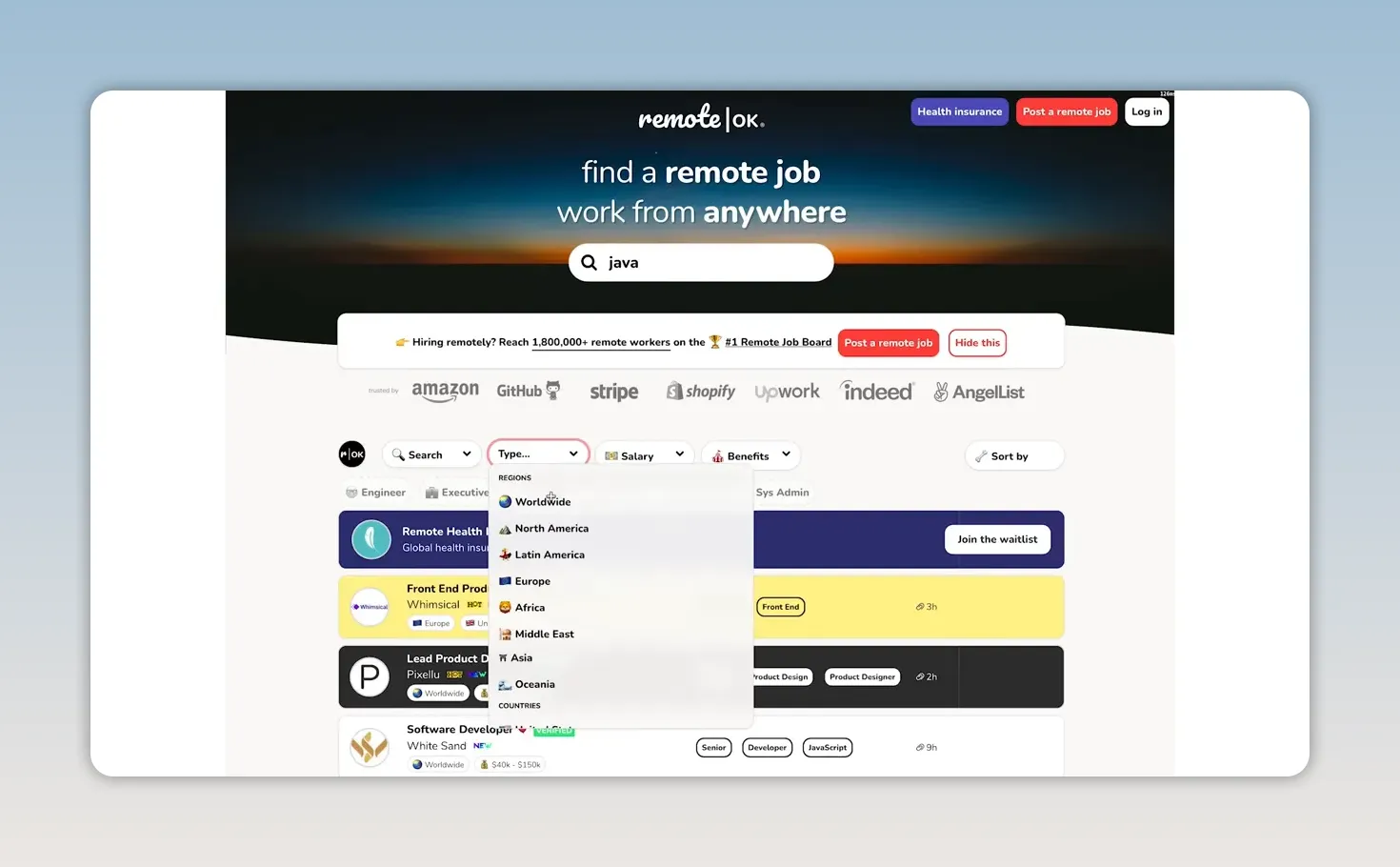
Filtering for worldwide opportunities on Remote OK can be a useful starting point. The key is to look beyond the word “remote” and check whether a company actually hires people where you live.
Build your skills alongside your network
My advice is to keep looking for opportunities, get involved in your professional community, and build connections. But don’t focus only on finding the opening. Focus on becoming someone who can make a strong case for getting it.
Global remote jobs can attract hundreds, if not thousands, of applicants. You’re competing with talented people from all over the world.
Develop real expertise and make your talent clear. Being able to show why you’re the right person for the work matters much more than simply wanting a remote role.
Why the Complications Are Worth It for Me
This arrangement comes with admin, responsibility for my own taxes, exchange-rate risk, and some evening work. It also gives me the chance to live in Spain while doing work I love with a team I’m genuinely part of.
If you’re curious about the work itself, Inside Marketing Design includes a conversation with David, the senior brand designer on my team, about our projects and processes.
I’m very grateful to have this job. International remote work isn’t completely straightforward, but for me, the combination of the role, the team, the income, and where I get to live makes it worthwhile.


